
What Good Corporate Event Execution Looks Like in Dubai
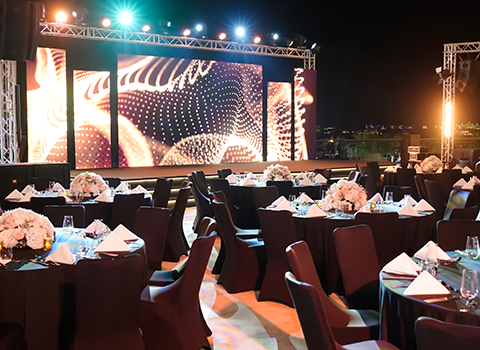
What Good Corporate Event Execution Looks Like in Dubai (And How to Tell the Difference)
Most event companies in Dubai will tell you the same things when you ask why you should hire them. Experience. Attention to detail. Flawless execution. These phrases appear on almost every website in the industry and are meaningless without evidence behind them. The harder question is not which company makes the best claim, but how you actually evaluate execution quality before the event happens. By the time the day arrives, it is too late to change your mind.
This article explains what good corporate event execution looks like at each stage of the process, from the first briefing call through to the moment your guests walk in. If you are a Marketing Director, HR Head, or Operations lead who is responsible for commissioning a corporate event in Dubai, these are the markers worth looking for.
What the Planning Process Should Feel Like
The quality of execution on the day is determined almost entirely by the quality of planning in the weeks before it. A well-run event company starts by asking questions that reveal operational knowledge, not just questions designed to confirm what you want to hear.
A reliable company will push back on a timeline that does not give enough lead time for venue build, technical rehearsal, and permit processing. They will ask who the decision-maker is and confirm that directly, because scope changes arriving through multiple channels late in the process are one of the most common causes of on-the-day problems. They will send you a written-brief summary after your first conversation, not to protect themselves, but because it is the fastest way to surface a misunderstanding before it becomes expensive.
If a company takes your brief, nods enthusiastically, and returns immediately with a polished proposal without asking any difficult questions, that is worth noting. Events that look good in a proposal and fall apart in execution usually have one thing in common: nobody asked the hard questions early.
Timeline Discipline Is the Most Reliable Quality Signal
The single most reliable indicator of how an event company will perform on the day is how they manage their production timeline in the weeks leading up to it. Good event companies run from a structured, shared timeline with clear milestones, owner names against each task, and enough buffer to absorb the late changes that always come.
Watch for how they handle the first delay. It will come. A venue confirmation takes longer than expected, a speaker drops out, a branded element needs to be reprinted. A company with strong execution processes flags the issue immediately, adjusts the dependent tasks, and communicates clearly without drama. A company that hides a problem until it becomes critical is showing you exactly how they will behave on the event day itself.
For a corporate conference or gala of 200 or more people in Dubai, a minimum of six to eight weeks of production lead time is realistic. Less than that compresses every downstream decision and forces the kind of last-minute improvisation that looks unprofessional from the client’s side of the room.
The Load-In and Technical Rehearsal Tell You Everything
If you want to know how good an event company actually is, walk into the venue during the build and load-in. What you see there is the real operating standard of the company, stripped of presentation decks and account management polish.
A well-run production team arrives at the venue knowing the plan. The stage dimensions, rigging points, power load, load-in access window, and run of show have all been confirmed in advance. The crew are not figuring things out on arrival. Each person has a clear role and a clear task, and they work without being managed. The lighting rig goes up while the sound system is being tested. The AV operator is running cue checks. The stage is set before the doors open, not during.
A technical rehearsal before guests arrive is not optional for any corporate event with speakers, award categories, video content, or a structured programme. A rehearsal reveals the problems that no amount of planning can fully anticipate: the presenter who runs eight minutes over their slot, the video file that plays at the wrong aspect ratio, the award winner who needs longer to walk to the stage than the music cue allows. These are the things that get fixed in rehearsal rather than in front of your guests.
| One question worth asking any event company before you hire them:
Ask specifically who will be in the venue on the day of the event. Will the account manager who sold you the project be there, or will they hand over to a junior coordinator and a freelance crew assembled for the day? The answer tells you a great deal about the level of accountability you can expect when something needs a quick decision on-site. |
What Good Execution Feels Like for the Client on the Day
On the day of a well-executed corporate event, the client is focused on their guests. Not on the production. Not on chasing the events team for updates. Not on explaining the run of show to a coordinator who should already know it.
There is one point of contact. That person knows the brief, knows the venue, knows the programme, and has the authority to make decisions without escalating every issue back to you. If a speaker is running late, the point of contact has already adjusted the run of show and briefed the MC. If the catering timeline is slipping, the point of contact has spoken to the kitchen and knows the revised timing. These things happen without you being involved, because you are there to host your event, not to manage your event company.
The room is ready before the first guest arrives. The AV works. The sound does not give feedback. Presenters know where to stand. The programme runs close to time. None of this is remarkable when it happens, and that is precisely the point. The best corporate events in Dubai feel effortless to the people attending them. That effortlessness is the product of a great deal of work done well in advance by a team that knows what it is doing.
How to Evaluate an Event Company Before You Sign
If you are currently assessing event companies in Dubai, these are the questions that cut through the surface-level selling and give you useful information:
- Ask for a reference from a client who ran a similar type of event to yours. Not a testimonial on the website. A name and a contact, so you can have a direct conversation.
- Ask how many of the crew on the event day will be in-house staff versus freelancers brought in for the job. The answer tells you how much institutional knowledge and accountability is actually in the room.
- Ask them to walk you through the last time something went wrong on an event and how they handled it. Every experienced company has a story. The quality of the answer tells you more than any portfolio review.
- Ask specifically who your day-to-day contact will be throughout the planning process and who will be present on the event day itself. If these are different people, understand why and what the handover process looks like.
- Ask for a sample production timeline from a comparable event. Look at whether it has milestones, owner names, and contingency built in, or whether it is a one-page schedule that lists the event programme.
A company that answers these questions with specifics is demonstrating operational maturity. A company that answers with generalities about their commitment to excellence is showing you a sales process, not an operations capability.
What the Companies That Consistently Execute Well Have in Common
In 20 years of producing corporate events across Dubai and the region, certain patterns show up consistently in the companies and teams that deliver well. They plan further ahead than the client asks them to. They document decisions and confirm changes in writing. Their in-house team carries the relationship from briefing through to post-event, rather than passing it between departments. They visit venues before the event date, not on it. They rehearse. They build contingencies into production plans rather than assuming everything will go to plan.
These are not remarkable qualities. They are the baseline of professional practice. The fact that they distinguish good companies from mediocre ones in this market says more about how crowded and unevenly skilled the Dubai event industry has become than it does about any single company.
How Pure Magic Events Approaches Corporate Event Execution in Dubai
Pure Magic Events has been producing corporate events across Dubai and the region for 20 years, for clients including Fujitsu, UiPath, the United Nations, Petrosil Group, and AIM Summit. Our in-house team manages the full scope from initial brief through production planning, venue coordination, and on-the-day execution. The same team that takes the brief is the same team in the room on the day.
If you are planning a corporate event in Dubai and want to have a direct conversation about what is involved and how we work, get in touch. We are happy to answer the difficult questions.
Frequently Asked Questions (FAQs)
1. How do I know if a corporate event company in Dubai will actually deliver what they promise?
The most reliable way is to speak with a direct reference from a similar event type, not a curated testimonial. Ask about a situation where something went wrong and how the company handled it. Experienced, accountable event companies have specific answers to this question. Those without real execution depth will give you a general assurance rather than a concrete example.
2. What should a corporate event company in Dubai provide before the event day?
A structured production timeline with named owners on each task, a written brief confirmation after the initial consultation, a venue site visit report, a run of show document shared with all stakeholders, and a confirmed crew list showing who will be on site and in what role. If these documents are not part of the company’s standard process, that is worth understanding before you commit.
3. How many weeks before the event should I hire an event company in Dubai?
For a corporate conference, gala, award ceremony, or product launch with 150 or more attendees, eight to twelve weeks is a realistic lead time for proper planning and production. Six weeks is workable but limits venue options and compresses the permit process. Less than four weeks significantly reduces what is achievable and increases cost across almost every supplier category in Dubai.
4. What is the difference between an event management company and an event production company in Dubai?
Event management covers the full planning and coordination scope: venue sourcing, logistics, catering, guest management, and overall programme oversight. Event production covers the technical execution: staging, AV, lighting, LED screens, and live crew. Many full-service companies in Dubai, including Pure Magic Events, handle both under one contract. This is often more efficient because briefing happens once and there is a single point of accountability across all workstreams.
5. What are the most common reasons corporate events in Dubai do not meet expectations?
From operational experience, the most common causes are: insufficient lead time that forces late decisions, unclear scope between the client and the event company, last-minute content or branding changes that cannot be absorbed by the production timeline, a single point of contact who does not attend the event day, and no technical rehearsal before guests arrive. Most of these are preventable with a disciplined planning process from the start.
6. Is it better to use one company for both event management and production in Dubai, or separate them?
One company managing both is generally more efficient for mid-scale corporate events. When management and production are split across two separate companies, communication gaps between them become the client’s problem to manage. Scope disputes over who is responsible for a specific element tend to surface on the event day, which is the worst possible time. Split the scope only when the event is large or complex enough to genuinely require specialist companies for each function.
7. What should I check in an event company’s portfolio before hiring them for a corporate event in Dubai?
Look for events that are genuinely comparable to yours in format, scale, and audience type. A company whose portfolio is primarily weddings and social events will not have the same operational infrastructure as one with a strong corporate conference and production track record. Ask specifically about events they have managed at venues similar to yours, with delegate counts similar to yours. References from those specific events are more useful than general testimonials.

Leave a Comment