
Ramadan Corporate Events Dubai 2026 | Plan the Perfect Iftar
How to Host a Corporate Iftar in Dubai That Guests Actually Remember
Most companies hosting a corporate Iftar in Dubai put considerable thought into the venue and the food. Both matter. But the events that guests walk away talking about tend to get a few less obvious things right as well. The atmosphere feels considered rather than assembled. The timing respects the occasion. The evening flows in a way that makes conversation easy and guests feel genuinely welcomed.
If you are responsible for planning one this Ramadan, whether for 50 people or 500, this guide covers the decisions that shape a good Iftar. Not just the logistics, but the details that determine whether your event feels like real hospitality or a well-budgeted obligation.
Why Companies in Dubai Host Corporate Iftar Events
The simplest reason is that Dubai’s corporate culture places a high value on hospitality, and Ramadan amplifies that value. When you invite clients, partners, or your team to break fast together, you are not just arranging dinner. You are participating in something that is deeply personal for many of your guests. It demonstrates respect for the local culture, and people notice that.
There is also a practical side. Many senior business relationships in the UAE are built and reinforced in social settings rather than in meeting rooms. An Iftar gathering gives you the space for those conversations to happen naturally, without the formality of a boardroom. Companies that have hosted Iftar events consistently report stronger attendance and engagement compared to standard corporate dinners, because guests arrive with a genuine appetite to connect – literally and professionally.
Choosing a Venue That Works for Your Group Size
Venue selection shapes almost every other decision, so it makes sense to start there. The two main formats are indoor ballroom or private dining setups, and outdoor tented arrangements. Both have clear advantages depending on your group size, budget, and the atmosphere you want.
Indoor Venues: Ballrooms and Private Dining Rooms
Hotel ballrooms and private dining rooms offer climate control, professional F&B service, and a polished setup. For corporate groups between 40 and 300 people, they are usually the most straightforward option. Many hotels in Dubai run dedicated corporate Iftar packages during Ramadan, which typically include Halal buffet catering, Arabic decor elements, prayer facilities on site, and dedicated service staff. The Atlantis, Waldorf Astoria, and Jumeirah-group properties are among the busiest during this period, so availability at weekends is limited. Booking at least three to four weeks ahead is necessary.
Outdoor and Tented Setups: Majlis Style and Open-Air Iftar
For larger groups or for companies that want a more distinctive atmosphere, a custom Ramadan tent is worth considering. Majlis-style tents with Arabic lanterns, soft lighting, and traditional seating create an environment that a hotel ballroom cannot fully replicate. These setups work well for groups of 100 or more and give your event company much more creative control over the layout, branding, and flow.
If you choose an outdoor format, keep the weather in mind. In early Ramadan, Dubai evenings in late February are around 20 to 22 degrees Celsius, which is comfortable. By the final week of the month, temperatures start climbing toward the upper 20s, so adequate cooling or ventilation should be factored into the setup budget.
Decor, Lighting, and Atmosphere
The visual environment matters more at an Iftar than at a standard corporate event. Guests arrive in the hour before Maghrib prayer and spend time seated together before eating. The setting they walk into shapes the mood for the entire evening.
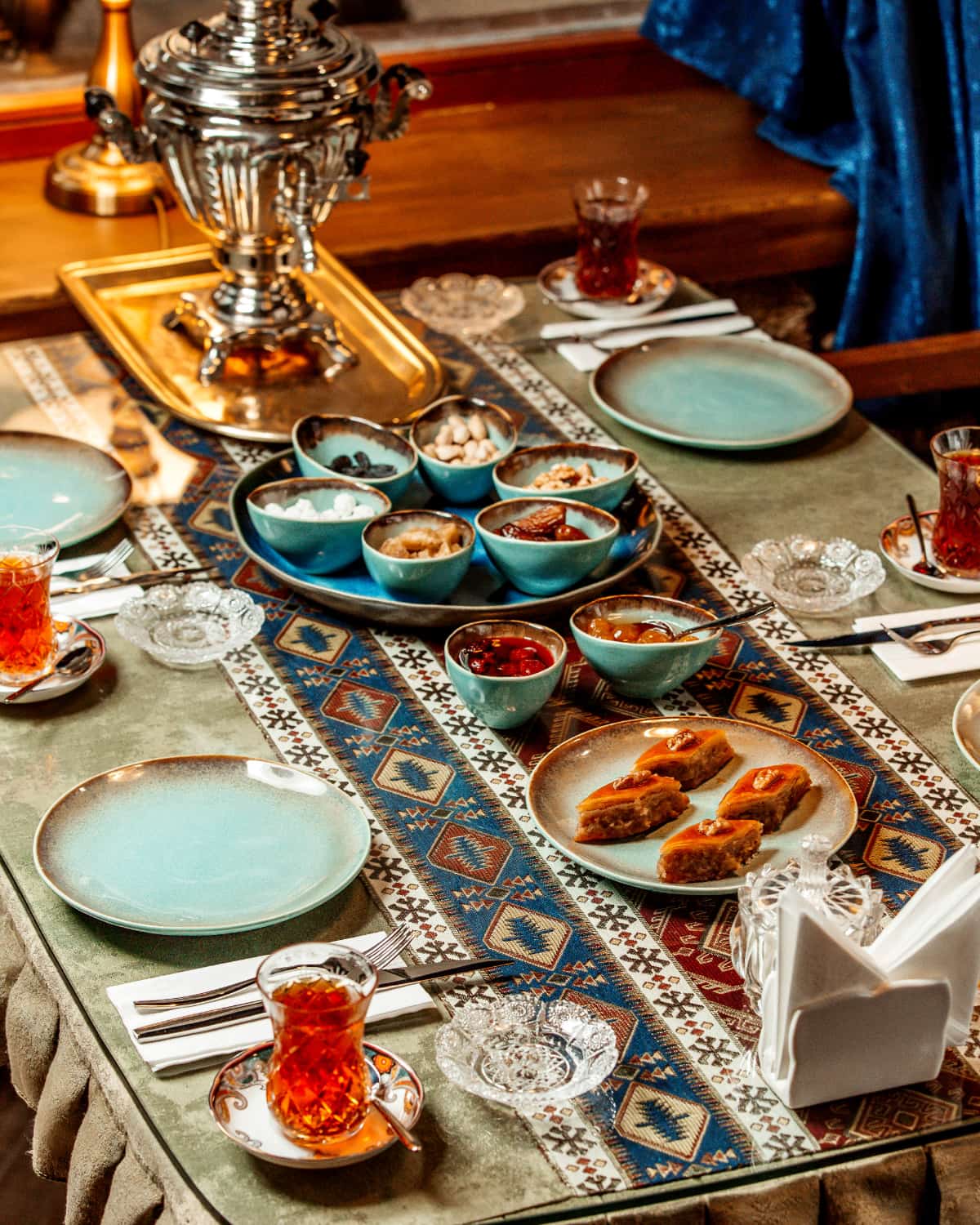
The most effective Iftar setups use warm lighting, specifically amber and gold tones rather than cold white LEDs. Crescent and lantern motifs work well as table centrepieces and in ambient installations. Incorporating elements like Arabic calligraphy, dates, and rose water on arrival tables, and subtle oud incense in the entry space all contribute to an atmosphere that feels considered rather than generic.
On the branding side, less is more. Small placard branding or a single branded backdrop for photography works well. Covering the venue in logos and banners reduces the warmth of the space and can feel out of place. The event should feel like hospitality, not a product launch.
Catering: Getting the Basics Right
Iftar catering has a specific structure that differs from a regular banquet. Guests traditionally break their fast with dates and water at the Maghrib call to prayer, followed by lighter items like soup, salad, and pastries before the main courses. A good caterer or hotel package will already account for this, but if you are working with a custom event company, make sure this flow is clearly built into the menu plan.
All food must be certified Halal. Serving non-Halal items at a corporate Iftar in Dubai is not just an oversight; it signals a lack of understanding that guests will remember. If your guest list includes vegetarians or attendees with dietary restrictions, a well-planned buffet format handles this more easily than a plated service, because guests can select what suits them.
Quick note on alcohol: Many companies ask about serving alcohol at a corporate Iftar. The short answer is that it is not appropriate at an event positioned as an Iftar gathering. If you want a separate drinks reception for non-fasting guests after the meal, discuss this privately with your venue. It should never be visible during the Iftar itself.
Timing and Scheduling Your Ramadan Corporate Event
Iftar in Dubai during Ramadan 2026 falls between approximately 6:10 PM and 6:30 PM depending on the date. This changes by a few minutes each day as the month progresses. Your event timeline should be built around this anchor point.
A practical run-of-show for a corporate Iftar looks something like this:
• Guests arrive and are seated 30 to 45 minutes before Iftar time.
• Arrival table with dates, fresh juices, and water is set ready before guests enter.
• At Maghrib, guests break their fast with dates and water. A short moment of quiet is appropriate and respectful.
• Light starters are served for 20 to 30 minutes before the main buffet opens.
• Main dining runs for 60 to 90 minutes.
• Dessert and tea are served as guests begin to wrap up and move toward departure.
• By 9:00 PM to 9:30 PM, most corporate Iftar events conclude.
One thing many planners underestimate is pre-Iftar traffic. Between 4:30 PM and 6:30 PM, Dubai roads are significantly busier than normal. Build an extra 20 minutes into your arrival window, and communicate that clearly in your guest invitations.
How Pure Magic Events Plans Corporate Iftar Gatherings in Dubai
At Pure Magic Events, we have been organising corporate events across Dubai and the wider region for 20 years. Ramadan events require a different kind of preparation compared to standard galas or conferences. The cultural context is specific, the timing is fixed around prayer times, and the atmosphere has to feel genuine rather than staged.
We handle everything from venue sourcing and Majlis-style tent setup to Halal-certified catering coordination, Arabic decor, AV support, and on-the-day management. Whether your group is 50 people or 500, we work to make sure the evening runs without the friction that derails corporate events. Our clients include organisations like Fujitsu, Petrosil Group, and the United Nations, and we bring the same standard of planning to every event we take on.
If you are planning a corporate Iftar in Dubai before Eid Al Fitr on 20 March 2026, availability is limited at this stage of the month. Contact us today for a free consultation, and we will put together a plan that fits your group size, budget, and timeline.
Frequently Asked Questions
How far in advance should I book a corporate Iftar event in Dubai?
Ideally, three to four weeks ahead is the minimum for a well-planned Iftar. Popular venues book out entirely during Ramadan, especially on Thursdays and Fridays. If you are still in the planning stage now, act quickly. We can typically work within a two-week lead time for smaller groups if the venue is confirmed quickly.
How much does a corporate Iftar event cost in Dubai?
The cost depends on your group size, venue format, level of decor, and how much production is involved. A seated hotel package works out very differently from a custom tented setup with full AV and branded elements. Rather than give you a number that may not reflect what you actually need, we prefer to put together a proper quote based on your brief. Get in touch and we will turn that around quickly.
What is the right level of formality for a corporate Iftar in Dubai?
That depends on your guest profile and the relationship you want the evening to reflect. A client-facing Iftar with senior stakeholders usually calls for a more structured setup — reserved seating, a considered menu, and some intentional flow to the evening. An internal team Iftar can afford to be more relaxed and social. The mistake most companies make is defaulting to one extreme: either over-producing it to the point where it feels stiff, or under-investing and making it feel like an afterthought. We can advise on the right format once we understand who you are hosting and what you want the evening to achieve.

Leave a Comment